
The all-rounder for your home
The hemp-lime block can be used almost everywhere in the house:
As an external wall, self-insulating masonry,
as a partition wall and internal acoustic wall,
as full thermal insulation for existing buildings as well as new builds,
as floor insulation
and in the renovation of old buildings.
Quantity calculation
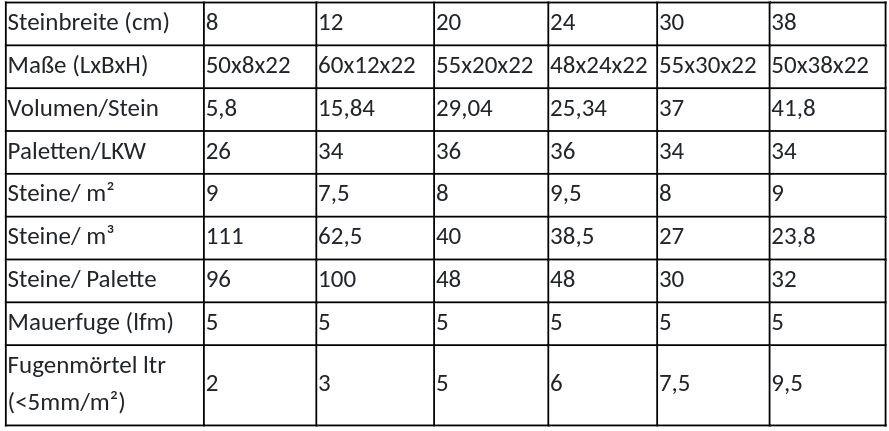


CUTTING AND CHASING
Hemp blocks are very easy to work with, and not only when cutting and chasing.
You can use a conventional hand saw, circular saw, band saw, reciprocating saw,
aerated concrete saw, Alligator saw or a standard wall chaser.
A carbide-tipped or steel blade is best suited for this.
For efficient and clean work, an Alligator saw
or a band saw is the best choice.
Moistening the hemp blocks makes cutting easier.
TEMPERATURE
High temperatures and dry air can cause the lime mortar to burn because it is absorbed too
quickly. For this reason, when plastering at over 30° C, the
blocks are also briefly moistened beforehand. At temperatures above 35° C or
below 5° C, no masonry work may be carried out.
FIRST COURSE OF BLOCKS
For external walls and walls on damp substrates, a damp-proof course
is laid beneath the wall. The wall must be completely and reliably protected
against rising damp.

Hemp-lime blocks in renovation
INTERNAL INSULATION WITHOUT VAPOUR BARRIERS, MEMBRANES ETC.
As hemp-lime blocks are highly moisture-tolerant and moisture-regulating, reduce the risk of mould thanks to the
high pH value and their moisture-regulating effect, and offer good insulation values, they are particularly well suited to renovations and energy-efficiency refurbishment measures.
Due to the high vapour permeability and the high pH value of the lime, no vapour barrier is used for internal insulation. The resulting condensation or condensate does not harm the material. The hemp absorbs so much moisture that no condensation will be released – but even then the hemp block would still insulate. Hemp-lime continues to insulate even when damp. Moisture is transported by capillary action and by diffusion.
PARTITION WALLS, ACOUSTIC WALLS, SOUND-INSULATING WALLS
Hemp blocks are also suitable for partition walls. The sound insulation values for each wall thickness can be found in the technical data sheet.
As the structure of hemp block is highly inhomogeneous, irregular and made up of different densities, sound waves are effectively interrupted and sound transmission is reduced.
Room sound is also absorbed very well thanks to the coarse surface.
A double-wall system achieves a sound reduction of up to 57 dB.
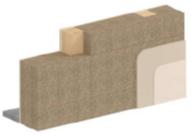
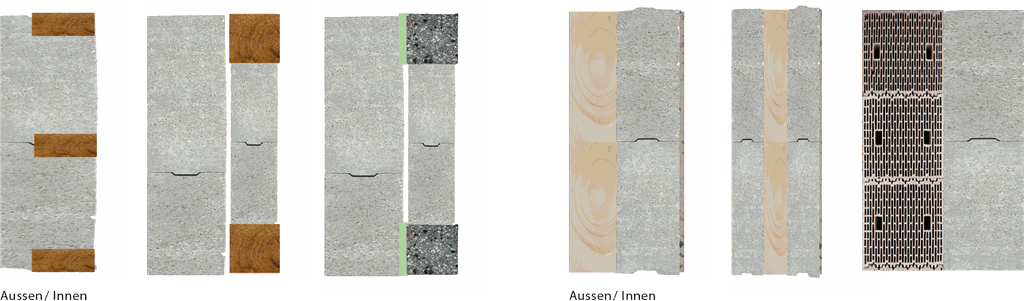
Hemp block in a timber frame

Hemp block as infill panel
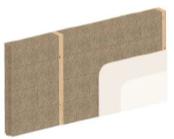
Hemp block as a partition wall
Hemp blocks laid within a supporting structure Hemp block wall without supporting structure
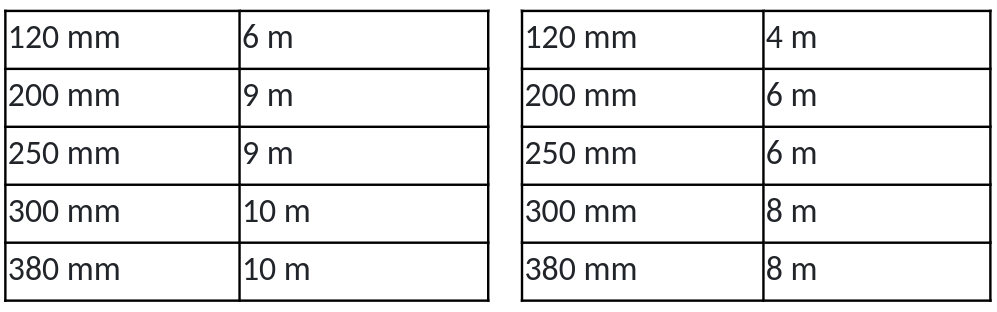
Maximum height of the hemp block wall without additional bracing
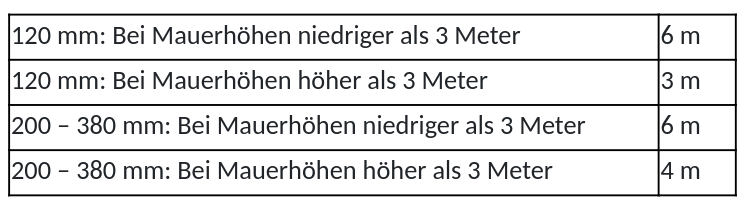
Maximum width of the hemp block wall without additional fixing

Plastering the surface
Hemp blocks must be plastered with vapour-permeable materials (e.g. the Hessler lime plaster system). Ideal paints are lime putty paints or clay paints (interior).
Interior plaster build-up:
Dampen the wall before plastering
Apply Hessler HP 9L lime base coat approx. 1,5 cm thick
Hessler HP 90 lime finishing plaster as the final coat (approx. 1,5 mm)
or equivalent products.
Clay plasters can also be used indoors. The plaster should always be cement-free
and highly vapour-permeable.
Exterior plaster build-up:
Dampen the wall before plastering
Apply Hessler HP 9L lime base coat approx. 1,5 cm thick
Hessler HP 90 lime finishing plaster as the final coat (approx. 1,5 mm)
Exterior coatings should be carried out with silicate paint. Prime with Siofix, paint with Siophob (where there is sufficient weather protection from a roof over-
hang, lime paint is also suitable). The plinth area must be protected against water,
e.g. by adding 10 % Roman lime to the HP 9L.
Full-surface reinforcing mesh is recommended for renovations; for new builds
only at key points (wall–window, wall–door, etc.).
HP 9 L is also used for laying the blocks; thanks to the lightweight aggregate in the
mortar, the joint does not form a thermal bridge.


Fixings
For internal and external insulation, the hemp blocks must be mechanically fixed to the existing wall (insulation fixings, 4 per m²).
The existing wall must be structurally stable and able to bear the weight of the insulation. Observe the maximum widths and lengths!
Windows of “normal” size can be fitted directly to the hemp blocks using a timber frame. The timber frame is fixed to the wall with 8/80 screws.
For “larger” windows, the frame structure is planned to the left and right of the window openings, and the windows are fastened to it, as are the hemp blocks.
Lintels are made of timber or as conventional brick lintels.
TOILETS, WASHBASINS, KITCHEN WALL CABINETS
Toilets, washbasins, kitchen wall cabinets, radiators and similarly heavy items are mounted on the frame structure.

What else should be considered...
Is it as light as it sounds ...
order our sample box now with a full-size block and information brochure