Circularity & building biology of hemp blocks
A building block for generations
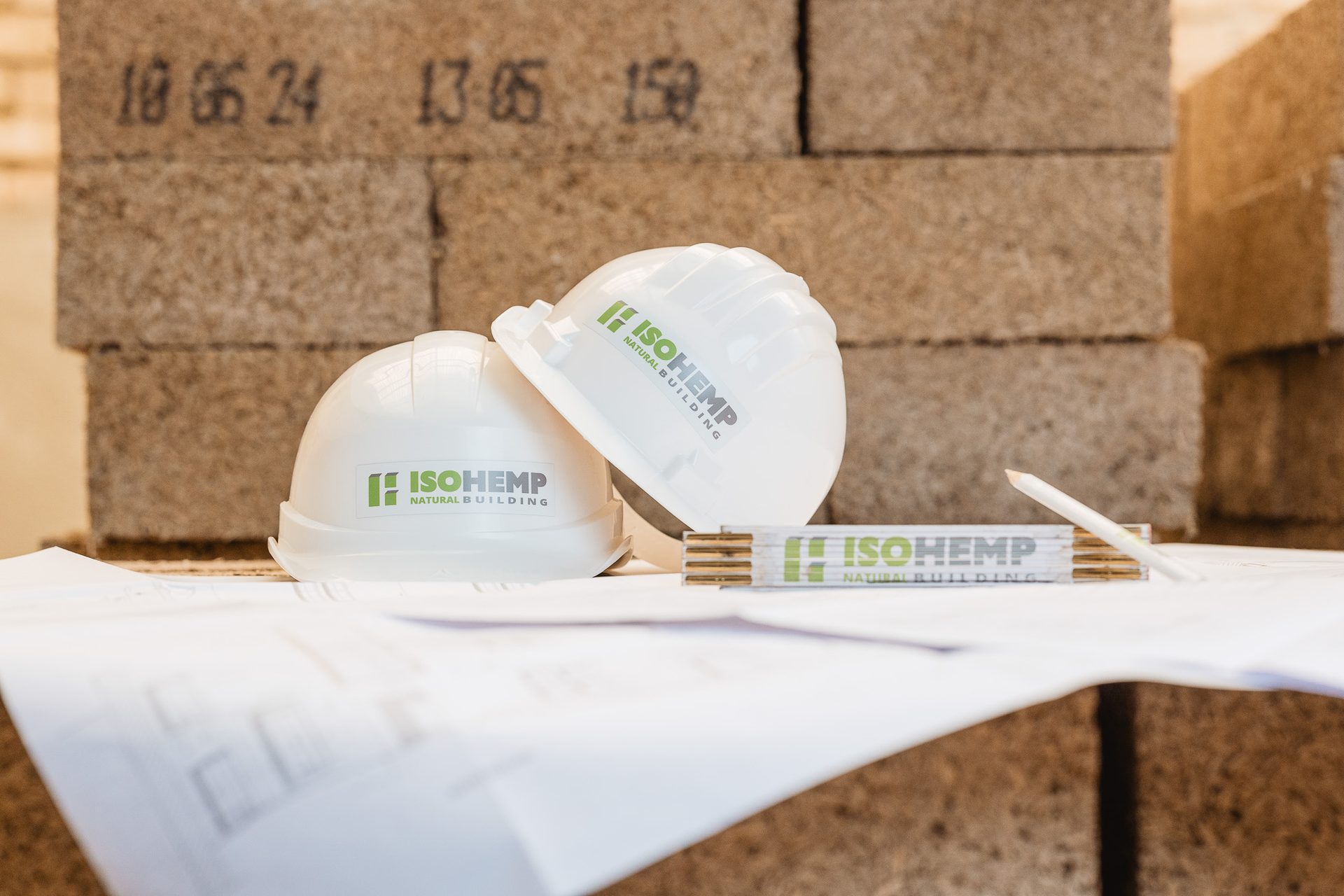
Building with hemp and lime
Buildings stand for decades – what happens to the materials at the end of their use matters from the very start.
Hemp blocks consist of hemp shiv from renewable hemp, lime and mineral additives. According to the FDES they store around 62 kg of CO₂ per m² of wall (36 cm) in the hemp and can buffer fluctuations in indoor humidity.
IsoHemp takes back hemp block offcuts from the building site through its RecyHemp programme.
Hemp and lime - that makes sense
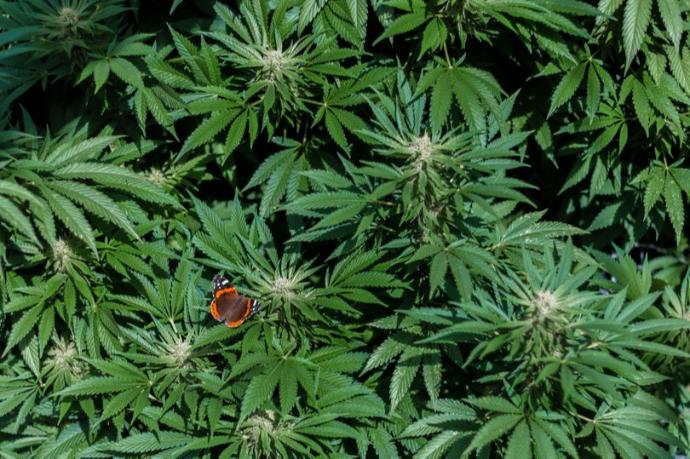
The symbiosis of mankind's oldest cultivated plant, hemp, with one of the oldest and most proven building materials, natural lime, results in the building material of the future: hemp-limestone.
Hemp is harvested after a single growing season. Combining the loose hemp shiv with natural lime and minerals makes the material solid and durable.
The 36 cm hemp block achieves a thermal resistance of R = 5.07 m²K/W (λ = 0.071 W/mK, FDES). Hemp lime can buffer fluctuations in indoor humidity.
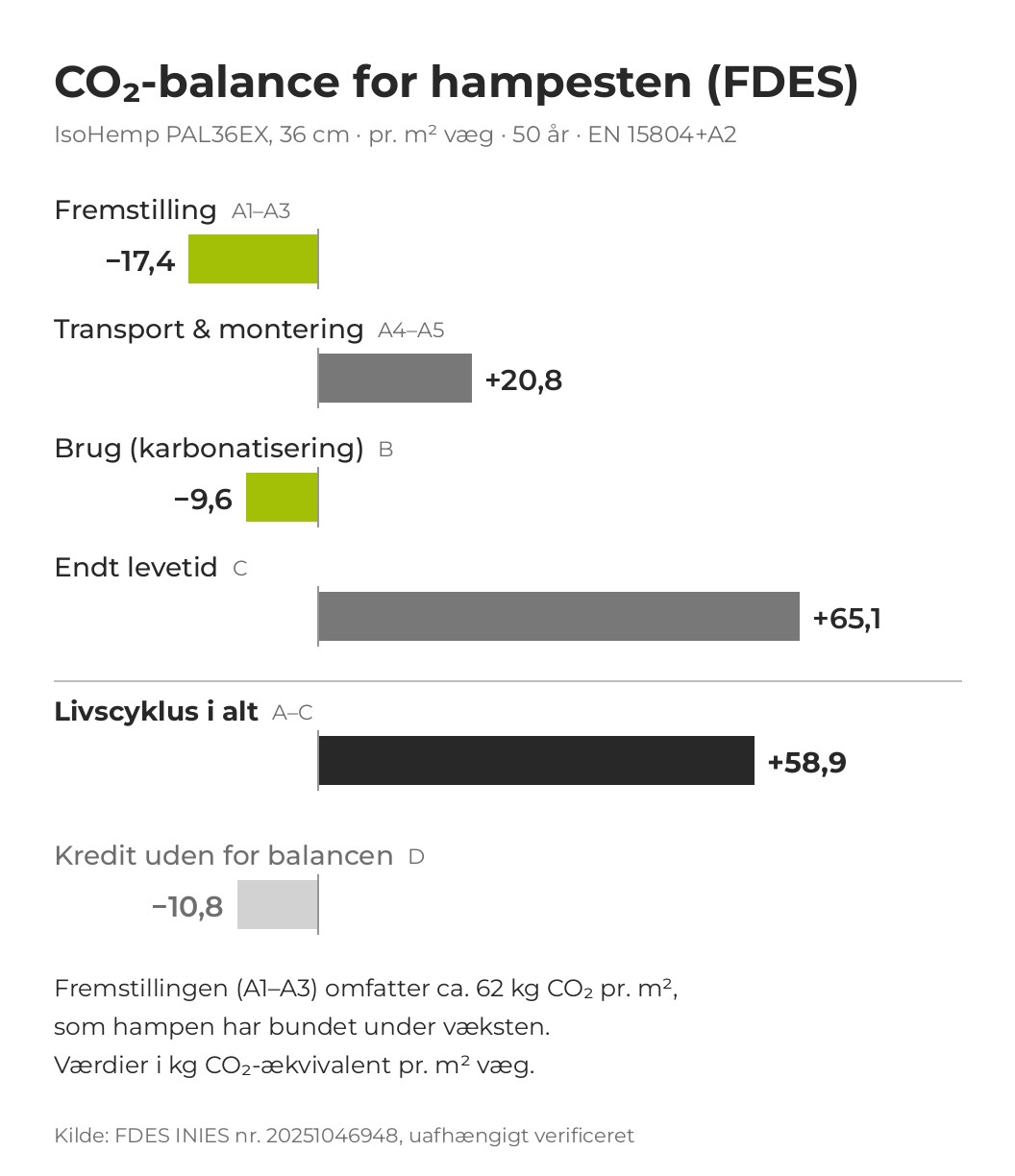
CO₂ storage: around 62 kg per m² of wall (FDES)
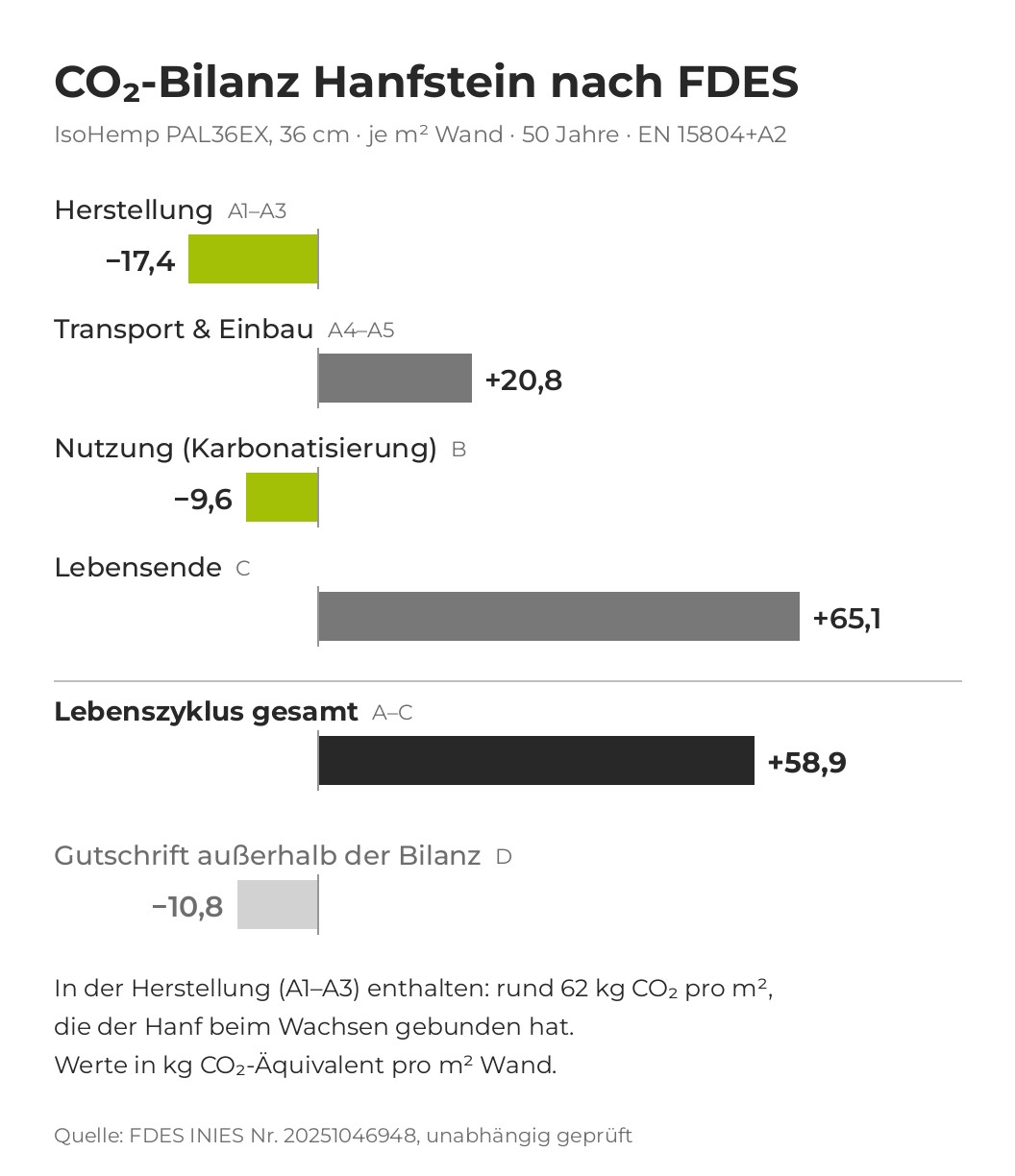
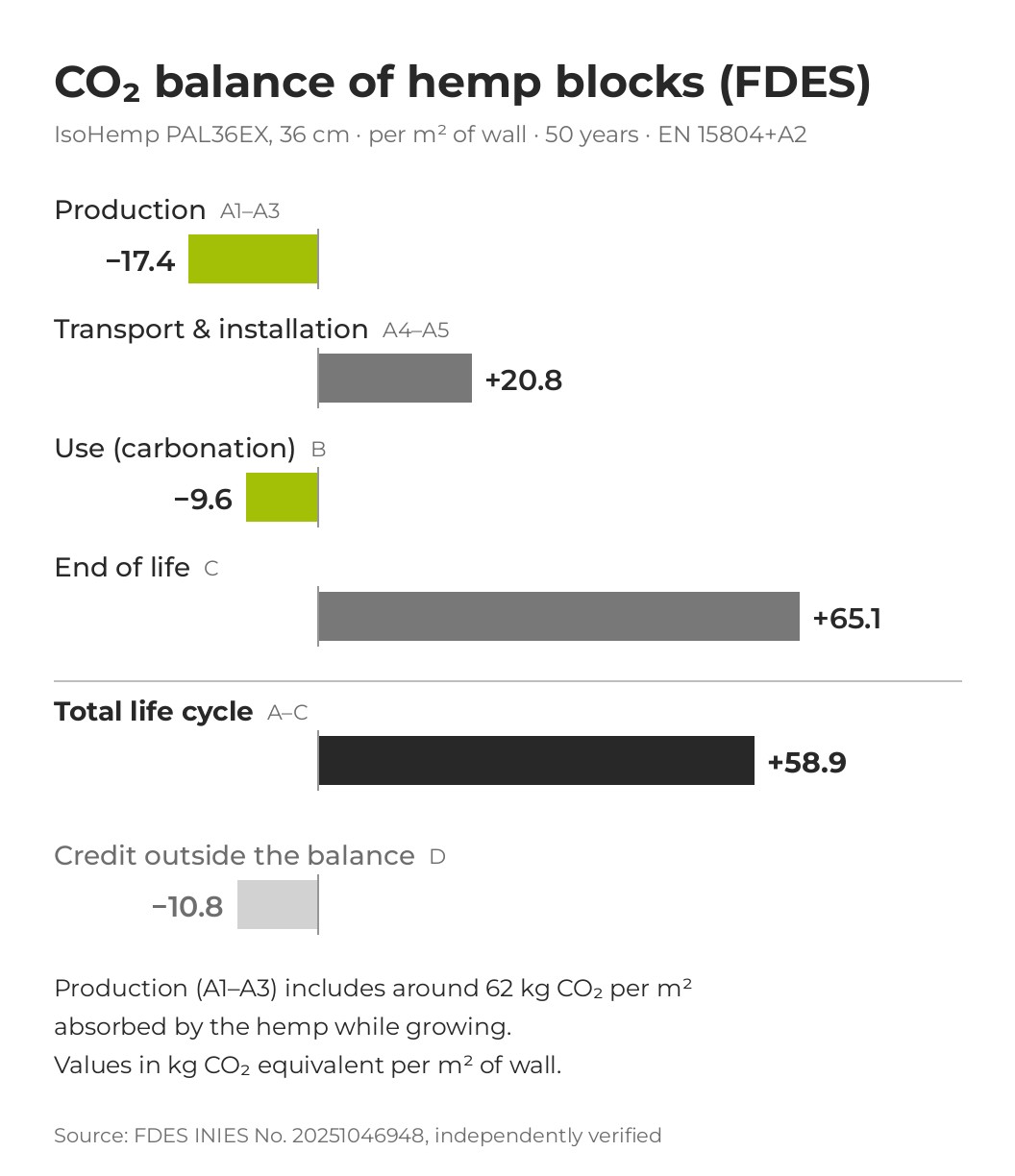
According to the FDES (EPD) to EN 15804+A2 (INIES no. 20251046948, independently verified), 1 m² of wall made of the 36 cm hemp block PAL36EX stores around 62 kg of CO₂ in the hemp (biogenic carbon).
Over the entire life cycle (A–C), the FDES reports +58.9 kg CO₂e per m² of wall – the chart shows the individual stages.
IsoHemp takes back hemp block offcuts from the building site through the RecyHemp programme (collection points in Fernelmont and Ghent, Belgium) and processes them into new materials.
Incidentally, hemp shiv, which makes up most of the block, is a by-product of hemp fibre production.