Building physics
of hemp limestones
The all-rounder for a balanced indoor climate
Thermal insulation
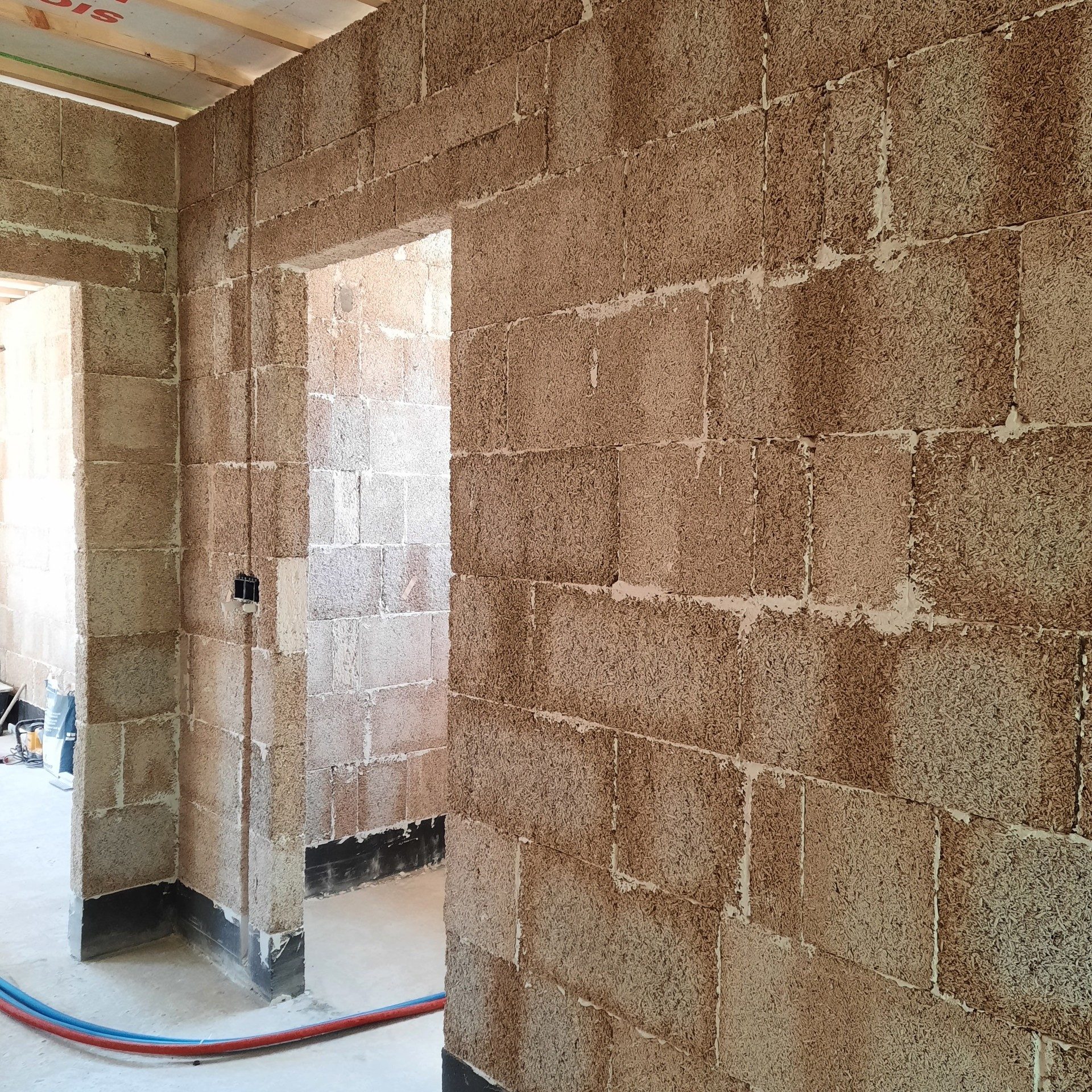
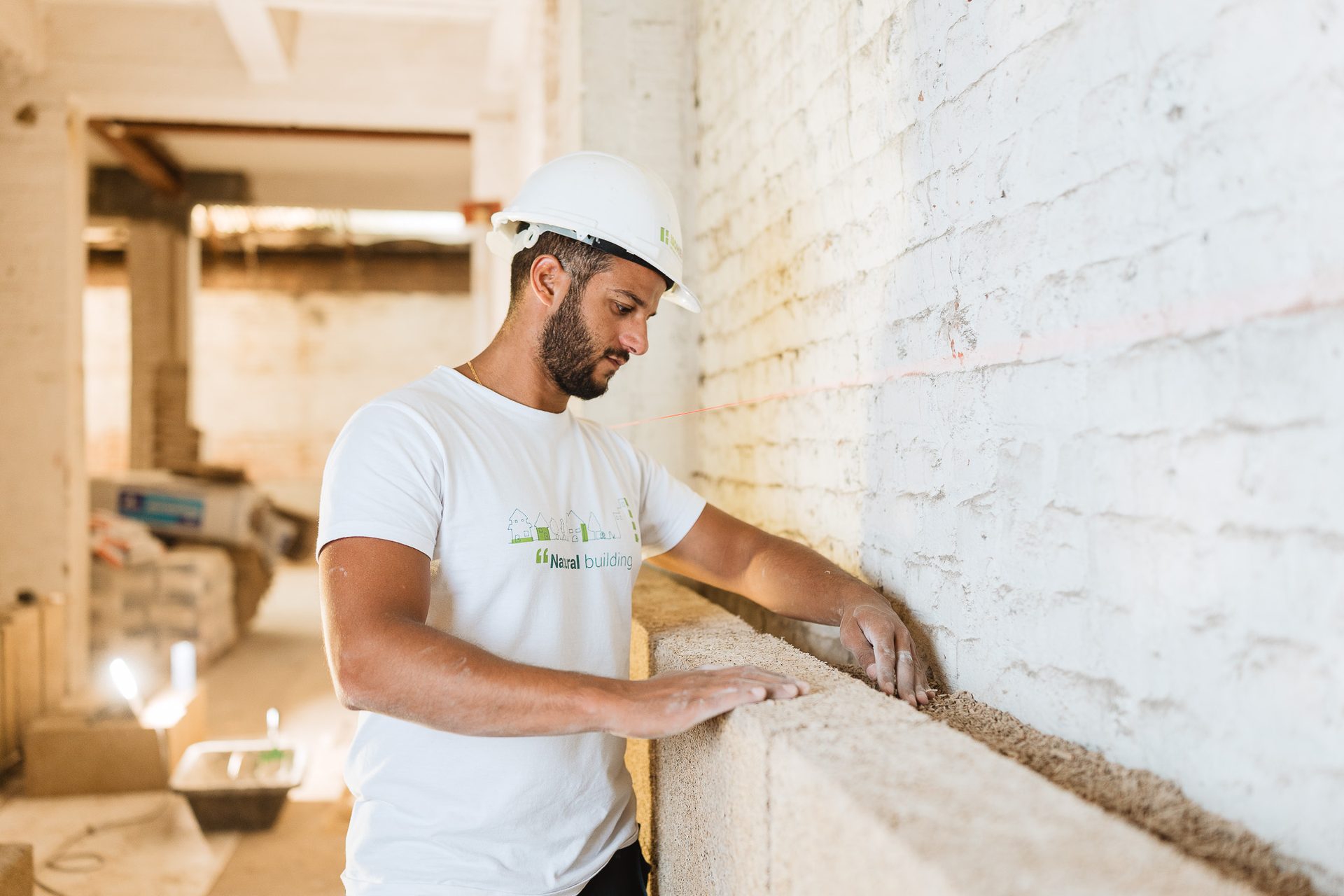
The Isohemp hemp block offers an insulating performance on a par with modern building materials. With a thermal conductivity λ of 0.071 W/(m·K), the hemp-lime block easily holds its own against competing products.
Because of its good insulating properties, hemp-lime blocks can be used for modern new buildings. A timber frame wall infilled with a 30 cm hemp-lime block achieves a U-value of 0.23 W/(m²K). For the renewal of external walls in existing buildings, the German Buildings Energy Act (GEG) requires a U-value of at most 0.24 W/(m²K).
With a 38 cm block plus a 24 mm wood fibre board as the external finish, the wall achieves a calculated U-value of around 0.17 W/(m²K).
In timber frame renovation, the hemp-limestone can be used very well for the interior insulation of an existing timber frame wall. 120 mm hemp-limestone provide a better insulation value than interior insulation with 160 mm light clay. Thanks to its high moisture absorption and the strongly alkaline lime, the hemp-lime block is well suited for historic building fabric.
Sound insulation, diffusion of sound
The inhomogeneous hemp fibre mixed with the mineral lime binder provides good sound insulation. Depending on block thickness, a single-leaf wall achieves a weighted sound reduction index Rw of 37 to 44 dB (IsoHemp data, ISO 10140-2, simulated value with plaster on one side).
For partition walls between two residential units, sound insulation can be further improved by a two-layer, decoupled construction.
Low flammability, strongly alkaline
Hemp grows fast, reaching several metres in height within a few months.
Hemp has been cultivated as a crop for centuries.
By mixing it with lime, the resistant hemp fibre becomes an even more stable building material. The IsoHemp hemp block has low flammability: reaction to fire class B-s1,d0 according to EN 13501-1.
As a fibre, hemp absorbs an extremely high amount of moisture without feeling wet at all and without losing its insulating effect. The moisture can be quickly released back into the room air. The lime in the hemp-lime block is strongly alkaline (high pH value).
Interior insulation: why the insulation value alone is not enough
With interior insulation, people usually only look at the λ-value. For a pleasant indoor climate in summer, however, it also matters how much mass on the room side can absorb heat.
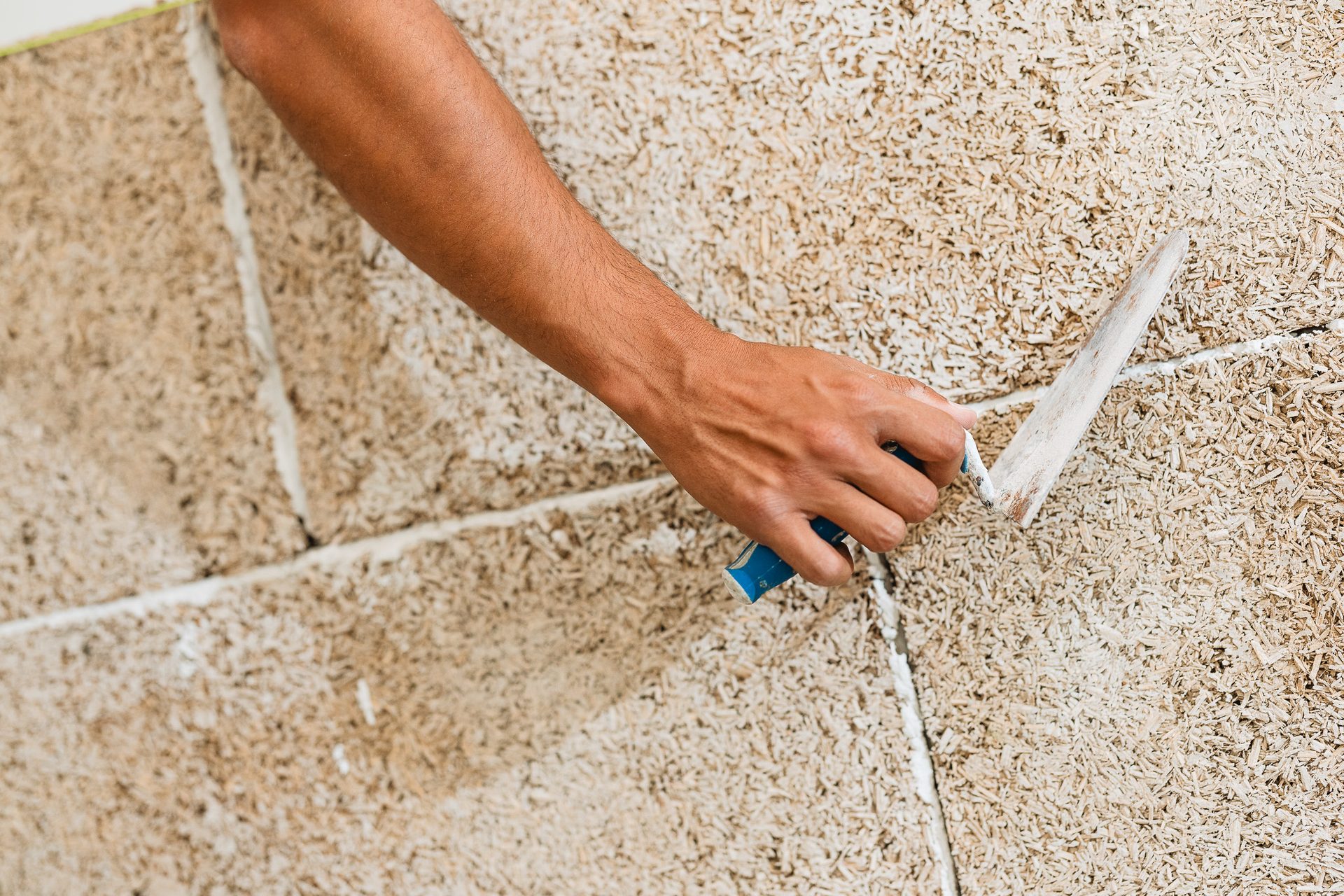
An old solid wall buffers heat well as long as it is connected to the room. If a lightweight insulation board is glued on the inside, the heavy wall is decoupled from the room – the room heats up faster. A lining wall of hemp-lime blocks insulates and at the same time brings the mass to the room side.
| At the same insulation value (R ≈ 1.7 m²K/W) | Hemp-lime block + HL-Mix | Lightweight mineral insulation board (mineral foam, approx. 90 kg/m³, glued) |
|---|---|---|
| Mass on the room side | approx. 38 kg/m² (12 cm) | approx. 7 kg/m² (7–8 cm) |
| Phase shift (ISO 13786) | 7.9 h at 12 cm, 13.1 h at 20 cm | – |
| Uneven existing wall | levelled out in the HL-Mix backfill | levelling plaster needed, then drying time |
| Surface | solid plaster base | reinforcement layer with mesh needed |
| Shelves, kitchen, TV | fixing in the block wall (HempFix, loads as per test report) | special plugs for light loads, heavy loads through the board into the wall |
| Thermal conductivity λ | 0.071 W/(m·K) | approx. 0.042–0.045 W/(m·K) |
If you only look at the λ-value, the board allows a thinner build-up. If you want rooms to heat up more slowly in summer, you need mass on the room side – and at the same insulation value, the hemp-lime block brings more than five times as much.
Hemp-lime block data: IsoHemp catalogue 2026 (density approx. 320 kg/m³, R 1.69 m²K/W at 12 cm). Insulation board: typical manufacturer data for mineral interior insulation boards.